
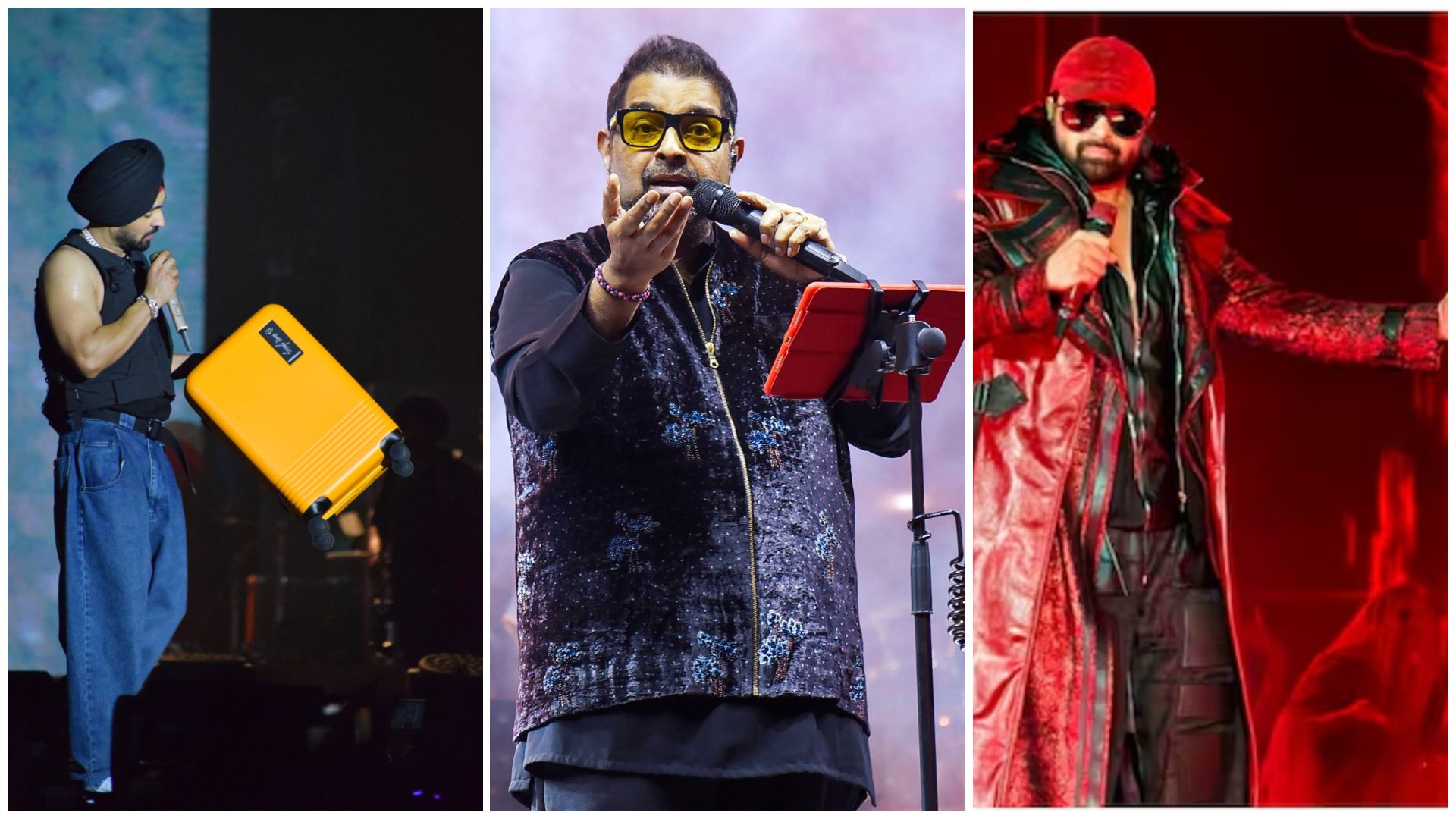
There was a time when brands merely visited the concert economy. They arrived as logos stamped on barricades, as banners flanking the stage, as polite thank-yous over the microphone. The performance belonged to the artist; the brand waited in the wings.
That era is fading.
Across India’s live music circuit, a new choreography is emerging — one in which the brand does not just sponsor the performance but becomes part of its dramaturgy. The stage is no longer a boundary. It is a site of collaboration, improvisation, and, at times, audacious intimacy.
Nowhere has this shift been more visible than in the concerts of India’s most recognisable performers.
When Celebrity Meets Celebrity: The Diljit Moment
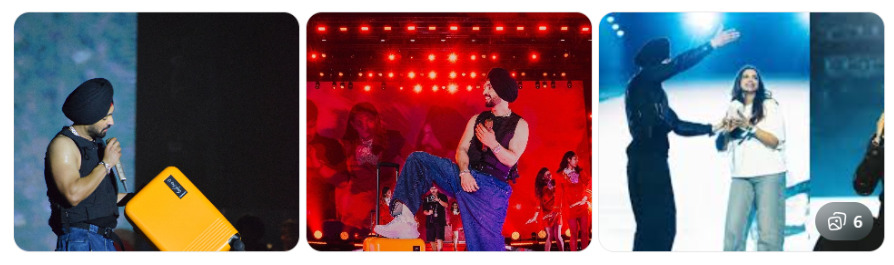
During his “Dil-Luminati” tour in Bengaluru, Diljit Dosanjh — one of the most charismatic, crossover Indian pop icons of the moment — invited Deepika Padukone on stage. It was not a publicity cameo. It was theatre. Standing beside him, she spoke not simply as a star but as founder-advocate of 82°E, her skincare label. Moments later, skincare products were being tossed into the crowd.
Later in Mumbai, another brand stepped into the spotlight: Mokobara, the premium luggage company Padukone backs. Strollers were given away during the show — not as backstage gifting, but as spectacle.
This went beyond endorsement. The brand became a character inside the performance.
It is worth pausing on that.
What might once have been a thirty-second TVC now exists as a shared cultural moment, folded into collective memory through sound, celebrity, and crowd electricity. The valuation of such placements, estimated at ₹5–8 crore for top-tier artists, is not simply a function of reach. It is a measure of proximity to meaning. When a brand is woven into the mythology of a live show, it borrows not only visibility but presence.
If Diljit’s integrations were playful, Shankar Mahadevan’s were almost philosophical in their simplicity.
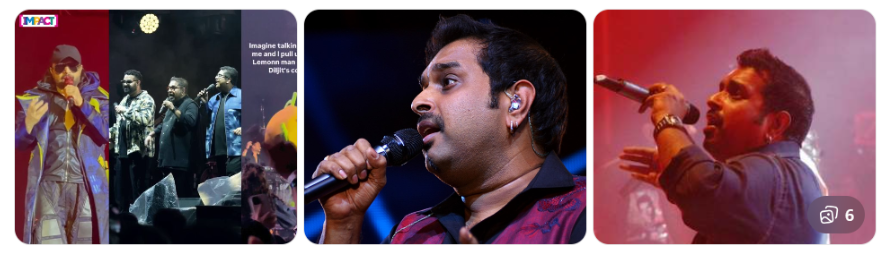
At a live concert in Mumbai’s Jio World Garden, the legendary vocalist paused in the middle of his iconic performance of “Breathless.” In a country where millions know this song as a technical marvel of stamina, the interruption itself was narrative power. He reached for a piece of Cadbury Celebrations Fusions chocolate, took a bite, and spoke the brand’s now-classic line:
“Kuch meetha ho jaaye.”
The audience laughed, cheered — and remembered.
Here, integration did not mimic the language of advertising. It subverted expectation, using the rupture itself as emotional currency. The product was not simply consumed; it became part of the song’s mythology. The line between artifice and authenticity blurred — and that tension is where contemporary branding increasingly lives.
Then there is Himesh Reshammiya — a pop phenomenon whose concerts function almost as opera: stylised, theatrical, knowingly exaggerated.
During his Cap-Mania tour in Delhi, a different kind of integration played out. Each time his voice needed clearing, he reached for a Vicks lozenge. Not as a discreet backstage ritual, but as performance behaviour — reinforced by the formal association of Vicks as the tour’s “Khich Khich Relief Partner.”
It was at once practical and performative. A lozenge became a prop. And the human physiology of singing — breath, fatigue, strain — became a brand narrative in real time.
In an era obsessed with “authenticity,” this is a fascinating inversion. Rather than pretending the strain of touring does not exist, the artist acknowledges it — and a brand steps in as symbolic caregiver.
These are not gimmicks. They speak to a deeper shift in the cultural economy of live performance — particularly in India, one of the world’s youngest and fastest-growing entertainment markets.
Three dynamics are converging:
1. Performance is becoming participatory.
Audiences do not simply attend; they co-experience. A product thrown into the crowd is not advertising. It is a touchpoint as a souvenir.
2. Brands are seeking narrative, not inventory.
Logo placements are passive. Moments are active. The latter live longer in social memory — and online circulation — than any banner possibly could.
3. Artists are evolving into cultural platforms.
Top-tier performers today are movements, not merely entertainers. Their values, aesthetics, humour, and politics shape how brands behave in public space.
And yet, the sophistication of these integrations is crucial. When brand behavior becomes too loud, it risks contaminating the sanctity of the performance. When done well, however, the brand dissolves into the story — an ingredient rather than an interruption.

mobic for joint pain
mobic for joint pain
dutasteride for women topical
dutasteride for women topical
allopurinol 100 mg tablet generic
allopurinol 100 mg tablet generic